

Living in Pattaya: A Realistic Guide for Long-Stay and Retirees (2026)
Pattaya is one of Southeast Asia’s most practical retirement bases: cheap condos, private hospitals, English-speaking services, and Bangkok two hours up the motorway. A one-bedroom in Jomtien costs ฿12,000–฿18,000 a month. Street food is ฿50–฿80 a plate. A modest pension goes further here, especially if you rent outside Central Pattaya and eat locally.
The honest caveat: Pattaya is not Chiang Mai. It’s louder, more commercial, and the nightlife is hard to ignore even if you don’t participate. It works best if you accept the noise, the traffic, the bar scene, and the heat before you sign a lease — not as things to be converted away from, but as the texture of the place.
Quick facts (checked October 2026)
- Retirement visa (Non-OA): Age 50+, annual renewal. Need ฿800,000 in a Thai bank account OR monthly income of ฿65,000.
- Monthly costs: ฿40,000–฿55,000 for a budget lifestyle; ฿60,000–฿85,000 for something comfortable.
- Best areas for long-stay: Jomtien (value, community), Pratumnak (quiet, residential), Wongamat (upscale north).
- Healthcare: Bangkok Hospital Pattaya and Pattaya International Hospital both handle English-speaking patients well.
- Health insurance: Budget USD 2,500–4,000/year (~฿90,000–฿140,000) for international cover.
- Bangkok is two hours away by bus or car — easy for flights, specialist care, or a change of scene.
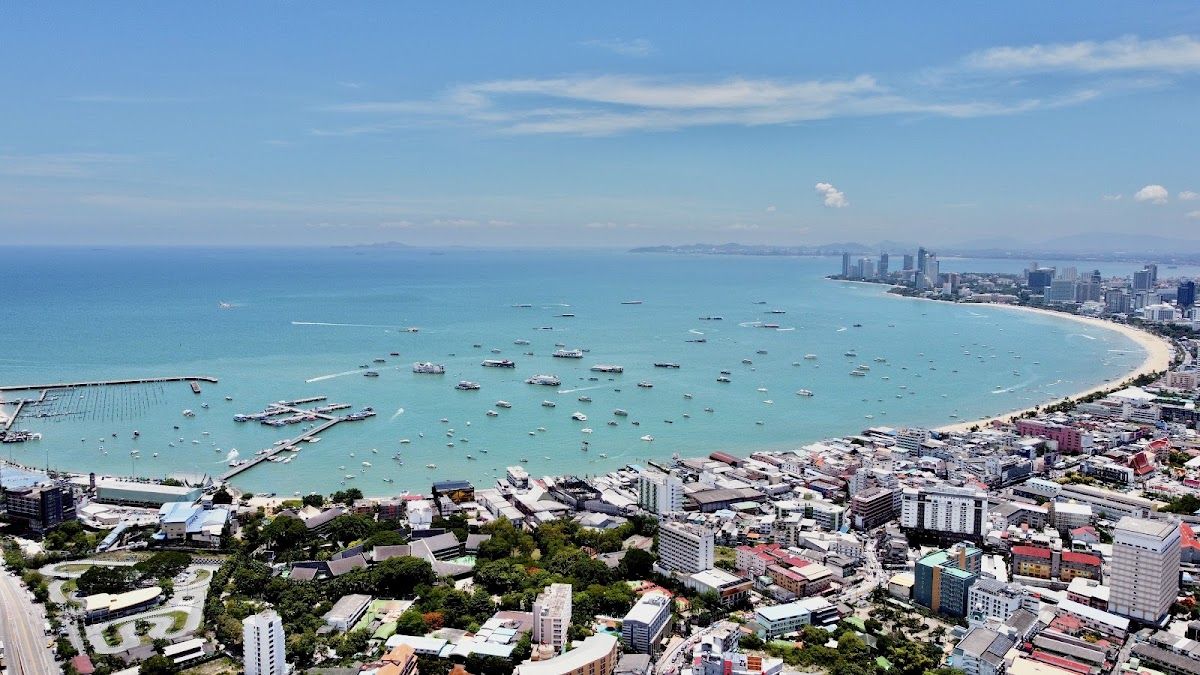
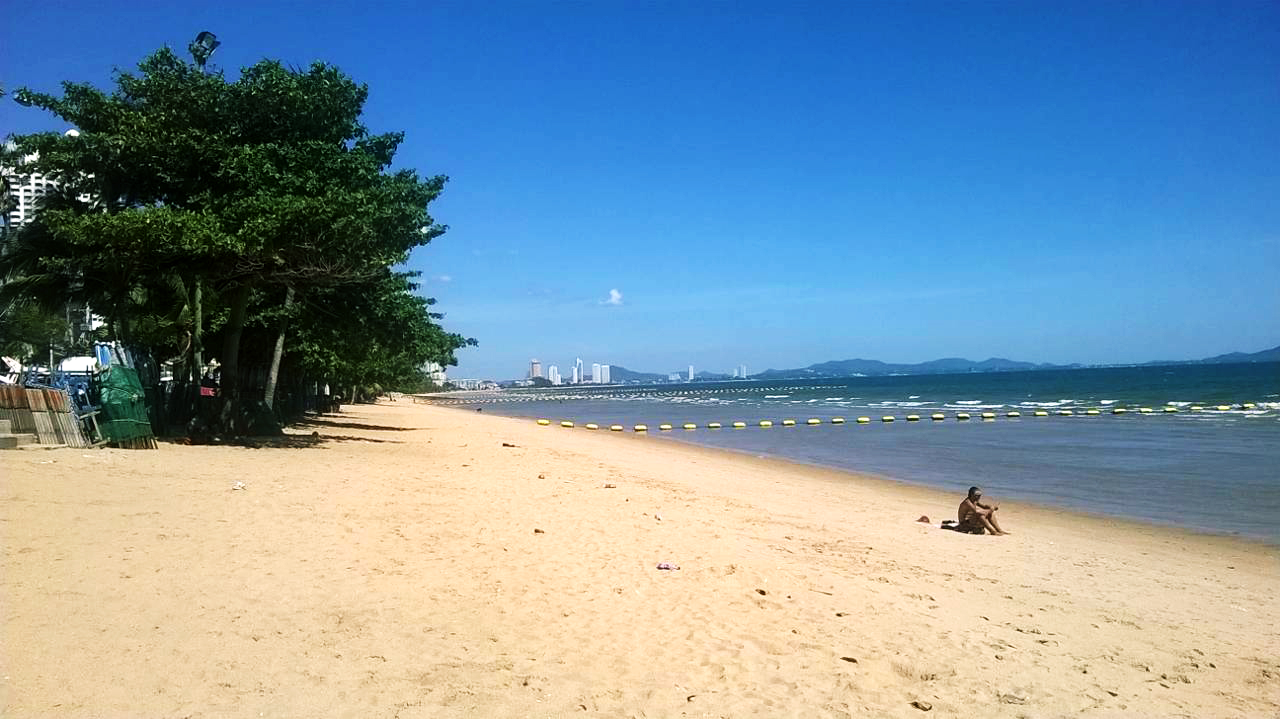
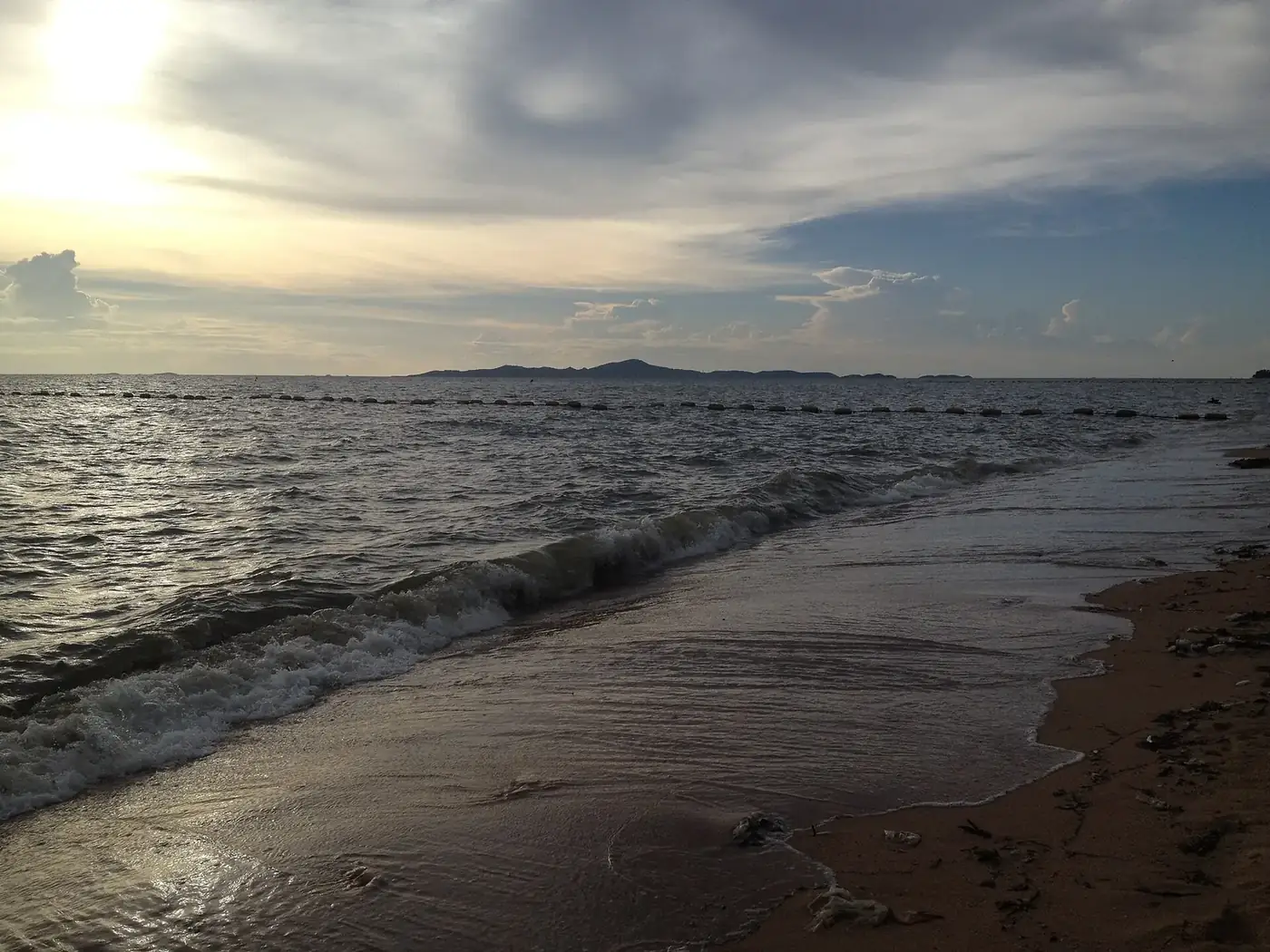
- The photo is Jomtien Beach, not Bangkok Hospital and not a condo pool.
The retirement visa (Non-OA)
The standard long-stay visa for retirees is the Non-Immigrant OA, commonly called the retirement visa. You apply at a Thai embassy in your home country (or a neighbouring country) and then renew annually at immigration in Thailand.
Eligibility: Age 50 or over at the time of application.
Financial requirement — you need one of the following:
- ฿800,000 deposited in a Thai bank account for at least two months before your extension application. After the extension is granted, the balance must remain at ฿800,000 for approximately 60 days, then must not drop below ฿400,000 for the rest of the year.
- Monthly income of ฿65,000 verified by a letter from your embassy or pension statements.
- A combination where savings plus (income × 12) equals ฿800,000.
Health insurance: Non-OA applicants must hold health insurance from an OIC-approved insurer with at least ฿40,000 outpatient and ฿400,000 inpatient cover per year. Several Thai insurers sell compliant policies specifically for this purpose. A qualifying Thai-hospital-only policy runs around ฿25,000–฿60,000 per year depending on age — it satisfies the visa requirement but won’t cover international evacuation or treatment abroad. Most retirees who want genuine cover buy a more comprehensive international policy on top.
Renewal: Done annually at the Pattaya Immigration Office, Jomtien Soi 5 (Soi 5 Moo 12, Jomtien Beach Road) — about 15 minutes from Central Pattaya. Open Monday–Friday 08:30–11:30 and 13:00–16:30. Walk-in only, no appointment system; arrive before 8 am to avoid a long wait. Most long-term residents handle this themselves once they’ve done it once.
For the full rundown on Thai visa categories and what’s changed recently, see the Thailand visa guide.
What it actually costs to live here
The numbers below are for a single person. Costs are in Thai baht (฿); note that THB is an overseas currency and exchange rates vary.
Budget lifestyle — ฿40,000–฿55,000/month
This means a Thai-style apartment outside the tourist zones (฿7,000–฿12,000), eating mainly street food and local restaurants (฿6,000–฿10,000), using the baht bus for daily transport (฿500–฿1,000), and keeping entertainment modest. Electricity runs ฿1,000–฿2,000 per month with air conditioning; fibre internet is ฿500–฿800.
Comfortable lifestyle — ฿60,000–฿85,000/month
A modern one-bedroom condo in Jomtien or Pratumnak (฿14,000–฿22,000), a mix of restaurants and home cooking, Grab rides alongside the baht bus, gym membership, and regular dining out. Most retirees end up closer to this bracket once insurance, Grab rides, imported groceries, and decent housing are factored in.
Western-lifestyle — ฿90,000–฿120,000+/month
Western supermarkets (Villa Market, Tops), imported food and wine, a car or regular Grab use, international clubs and golf, and a condo with a sea view. Entirely possible in Pattaya — just know the cost scales quickly once you start importing habits.
The main surprise expense: health insurance. Thai-hospital-only policies that satisfy the visa requirement start at ฿10,000–฿20,000 per year, but if you want genuine international cover (evacuation, treatment abroad, cancer cover), budget USD 2,500–4,000 per year (~฿90,000–฿140,000). Most retirees on fixed pensions use a hybrid: a Thai-compliant policy to satisfy immigration plus a top-up travel policy from home for emergencies.
Best areas for long-stay living
Jomtien — the expat heartland
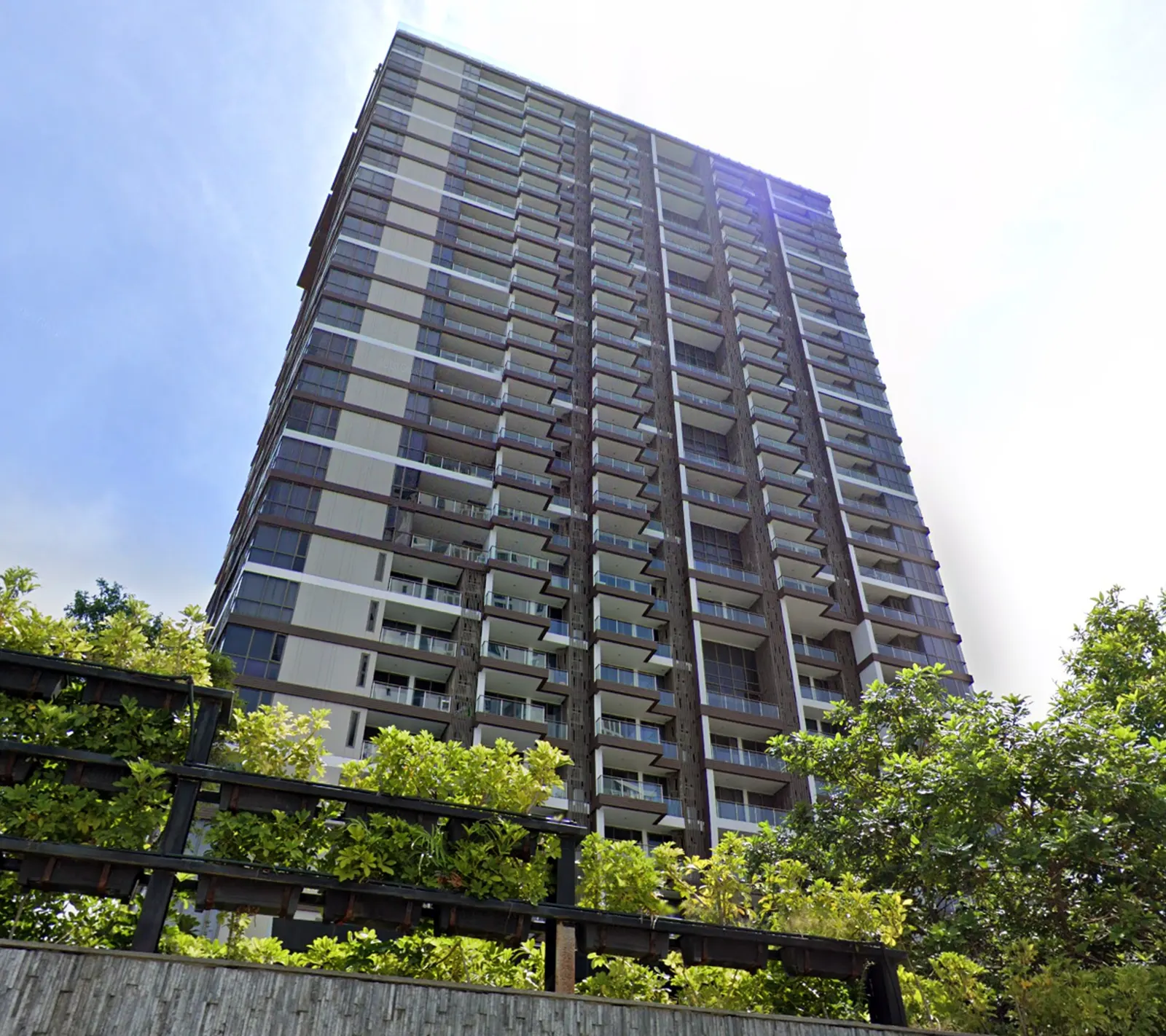
Six kilometres of beach, quieter than Central Pattaya, and home to the largest concentration of long-stay condos in the city. The median monthly rent for a one-bedroom is around ฿18,200 based on current listings; well-kept older buildings start at ฿10,000–฿12,000. Jomtien has an established community feel — English-speaking residents, familiar faces at the markets, and several expat-friendly cafés and restaurants that have been running for years. The beach itself is better maintained than Pattaya Beach and the pace is noticeably slower. For a first year in Pattaya, Jomtien is usually the safest bet.
For a full breakdown of the beach and what’s in the area, see the Jomtien beach guide.
Pratumnak Hill — the quiet residential choice
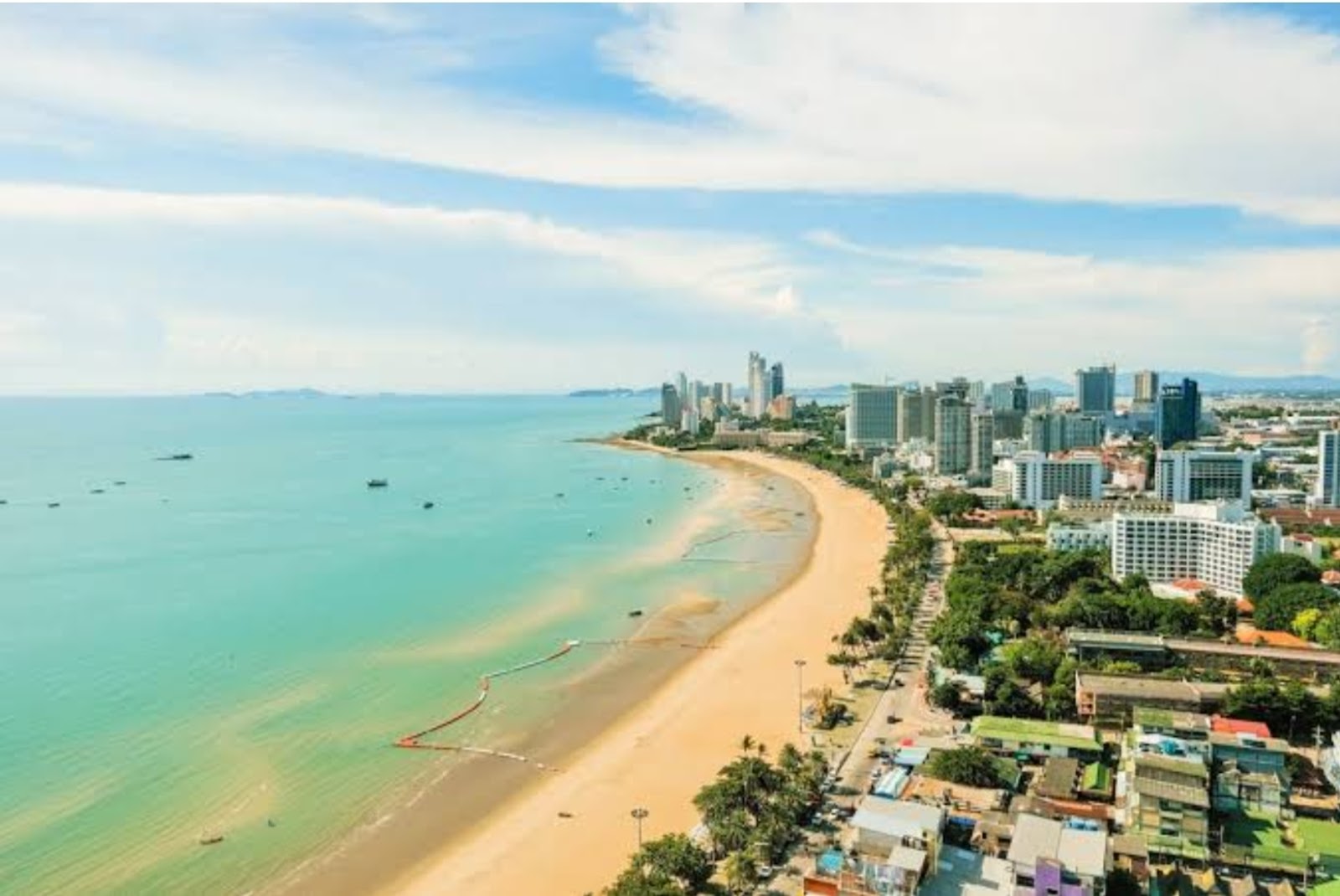
Between South Pattaya and Jomtien, Pratumnak sits elevated above the coast with some of the best views in the city. The resident mix is mostly European retirees and owner-occupiers who want somewhere they can actually live rather than just visit. Newer condos here run ฿15,000–฿26,000 for a one-bedroom; older buildings are cheaper. There’s less beach infrastructure than Jomtien but Cosy Beach and Pratumnak Beach are a short walk down the hill. Pratumnak suits people who want to stay near Pattaya without living in the middle of it.
Wongamat — upscale north Pattaya
Wongamat Beach is cleaner and quieter than the main Pattaya bay — no jet ski operators, no touts, mostly condo residents and hotel guests. The area runs luxury, with modern towers starting at ฿25,000–฿40,000+ per month for a one-bedroom. If budget isn’t the priority and you want the best-quality beach in the city, Wongamat is it.
Central Pattaya — convenient but not restful
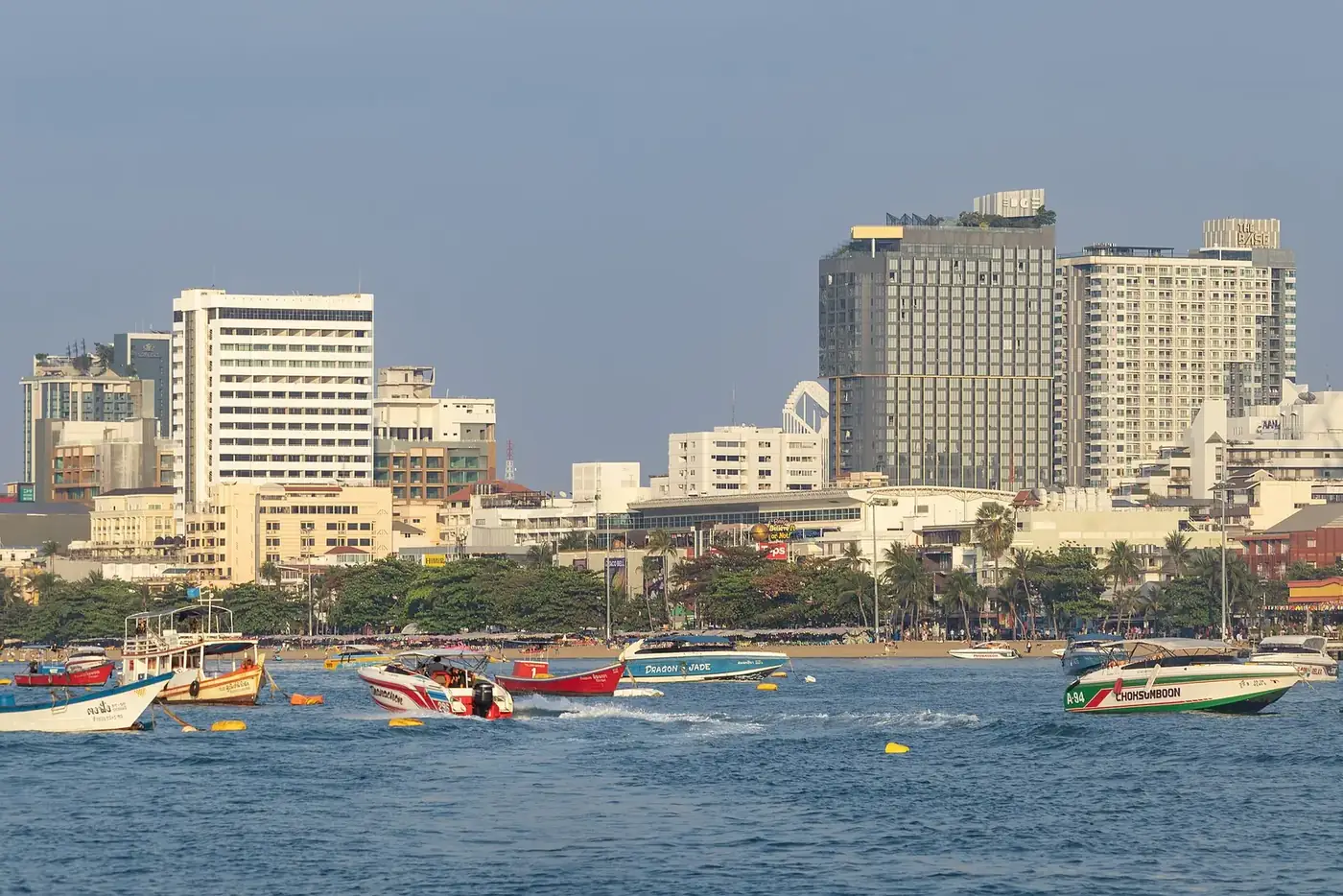
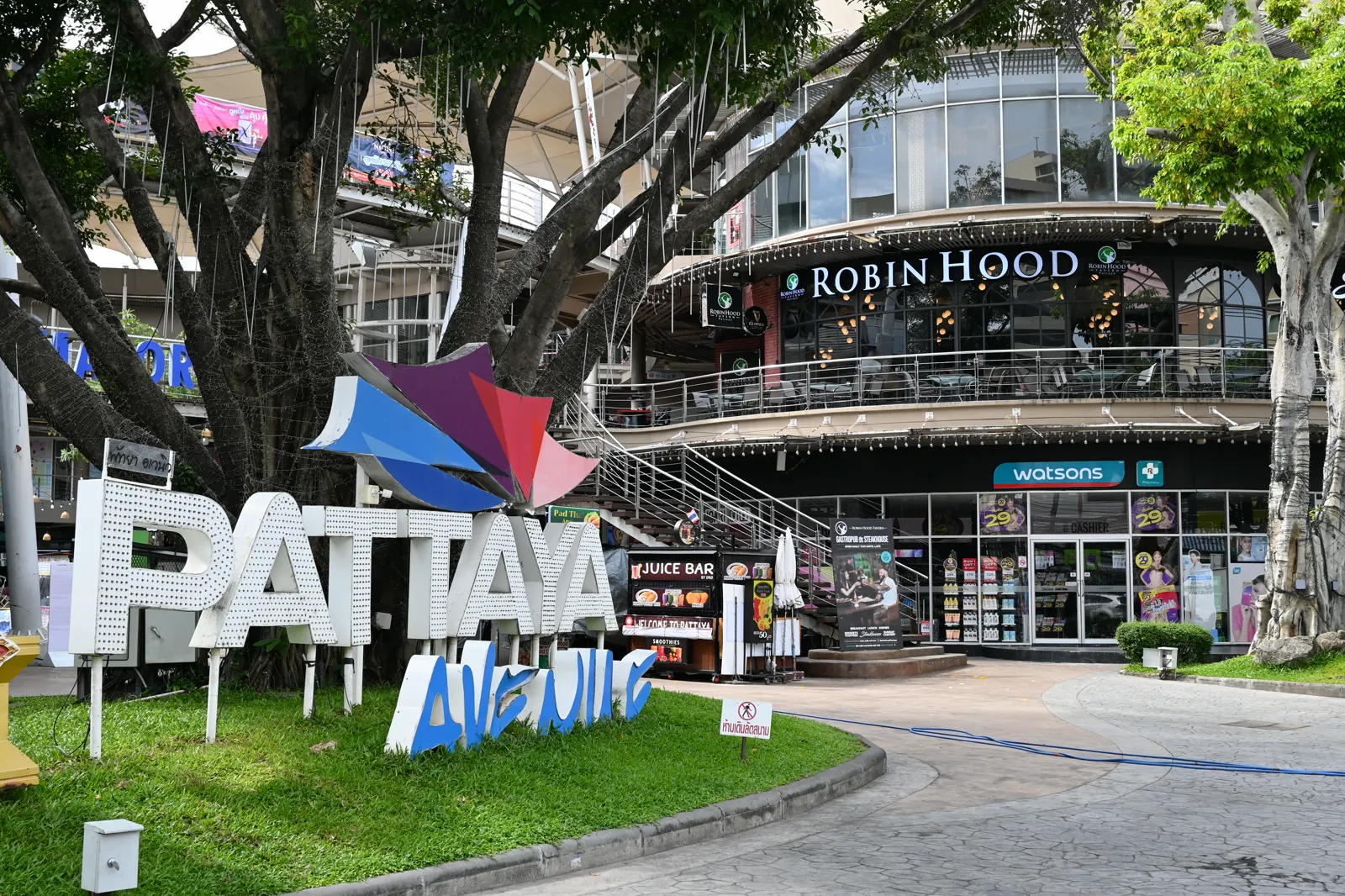
Closest to everything: shops, transport, restaurants, hospitals. Rent is reasonable (฿12,000–฿20,000 for a decent one-bedroom). The trade-off is noise and foot traffic from the tourist zones. Fine if you value convenience over quiet, but most long-stay residents migrate to Jomtien or Pratumnak within a year.
For more detail on all the neighbourhoods, the where to stay in Pattaya guide covers each area’s trade-offs.
Healthcare
This is the deciding factor for many retirees, and Pattaya is well set up.
Bangkok Hospital Pattaya on Sukhumvit Road is the main international-standard option — a JCI-accredited private hospital with English-speaking doctors across most specialities, modern imaging, and a dedicated expat health programme. GP appointments run ฿800–฿1,500; specialist consultations ฿1,500–฿3,500.
Pattaya International Hospital (PIH) is slightly older but well-regarded and cheaper for routine care. Many long-stay expats use PIH for minor things and Bangkok Hospital for anything more serious.
Public hospitals (Pattaya City Hospital, Chonburi Hospital) are significantly cheaper but expect longer waits and less English coverage.
For dental work specifically, Pattaya has a strong private dental sector — see the dental and medical tourism guide for a full breakdown of prices and recommended clinics.
Daily practicalities
Banking
You’ll need a Thai bank account to satisfy the retirement visa financial requirements. Bangkok Bank and Kasikorn Bank (KBank) are the most expat-friendly for opening accounts — most branches in Pattaya will assist non-residents with passport and visa documentation. Some branches now ask for a Non-OA visa before opening; if you’re on a tourist visa still sorting residency, ask around as policies vary by branch.
Once your account is set up, ATM withdrawals from your home bank carry a flat ฿220 fee per transaction. Pull out larger amounts less frequently. The Pattaya money guide covers exchange rates, tipping, and the full picture on cash versus cards.
Getting around
The baht bus (blue songthaew pickup trucks) covers Beach Road and Second Road for ฿10 a ride — invaluable for daily errands in Central Pattaya. Grab and Bolt apps handle everything else. Most long-stay residents in Jomtien and Pratumnak pick up a bicycle or a scooter for local trips; the terrain is flat and distances are short. The getting around Pattaya guide covers all the options with current prices.
Internet
AIS Fibre 500 Mbps runs ฿799 a month — fast and reliable. Most condos in Jomtien and Pratumnak already have fibre installed; confirm the provider before you sign a lease if working speed matters to you.
What to watch out for
The 90-day report: Even on a long-stay visa, you must report your address to immigration every 90 days. This can be done in person at the immigration office, by post, or online. It’s a minor admin task but first-timers miss it and face fines. Set a calendar reminder.
Property ownership: Foreigners cannot own land in Thailand. You can own a condominium unit outright (up to 49% of a building’s units may be foreign-owned) or rent. If someone is selling you the idea of land ownership via a Thai nominee company, get legal advice before you proceed.
Tax: Thailand introduced rules in 2024 requiring residents who spend 180+ days in-country to declare foreign income remitted to Thailand for tax purposes. The rules are being clarified but are worth getting professional advice on if you have a pension, property rental income, or investments abroad.
An honest look at what Pattaya life is really like in 2026 — costs, lifestyle, trade-offs.
Frequently asked questions
How much money do you need to retire in Pattaya?
The visa requires either ฿800,000 in a Thai bank account or monthly income of ฿65,000 (~USD 1,900). Day-to-day, most retirees spend ฿40,000–฿85,000 a month depending on lifestyle. Health insurance is a significant additional cost — budget ฿10,000–฿140,000 per year depending on the level of cover you need.
What is the Thailand retirement visa and how do you get it?
The Non-OA is for anyone aged 50+ who can prove ฿800,000 in a Thai bank account or ฿65,000/month in pension income. You apply at a Thai embassy before arriving in Thailand, then renew annually at immigration. Health insurance is compulsory. The Thailand visa guide has the full checklist.
What is the best area to live in Pattaya for retirees?
Jomtien is the most popular — large expat community, good value, calmer beach. Pratumnak Hill is better for those who want something quieter. Wongamat in north Pattaya is the upscale option.
How good is healthcare in Pattaya?
For routine private care, Pattaya is strong. For complex cardiac, cancer, or neurological work, most retirees still go to Bangkok — two hours away. More detail in the Pattaya healthcare guide.
Can foreigners buy property in Pattaya?
You can own a condo unit outright (under the 49% foreign ownership cap). You cannot own land. Most first-time long-stayers rent — the market has a large supply of well-priced long-term condos.