

Money in Pattaya: ATMs, Cash, Cards and Tipping Explained (2026)
Thailand runs on cash more than most people expect. Cards are fine at big hotels and major malls, but street food stalls, baht buses, small bars, local markets and most massage shops are cash-only. Sort your money strategy before you land and you won’t be stuck hunting for an ATM when all you want is a baht bus and a bowl of noodles.
This guide covers the ATM fee situation (it’s worse than you’re hoping), where to get a decent exchange rate, when cards actually work, and the tipping conventions that trip up most first-timers.
Quick facts (checked October 2026)
- ATM fees for foreign cards are a flat ฿220–฿250 per withdrawal regardless of card network. AEON Bank ATMs charge less at ฿150. Withdraw larger amounts less often to keep the fees down.
- Always choose to pay in Thai baht at ATMs and card machines. Accepting the machine’s conversion offer costs you an extra 3–7% on top of the flat fee.
- The best exchange rates in Pattaya are at T.T. Currency Exchange (yellow booths throughout the city) and the SuperRich counter inside Central Festival Mall. Airport and hotel rates are the worst by a wide margin.
- Tipping is optional, not culturally expected. ฿50–฿100 after a massage, rounding up a taxi fare, leaving small change at a casual restaurant — that’s the standard. Many sit-down restaurants add a 10% service charge already, so check the bill before you add more.
- For daily cost estimates, the Pattaya budget guide breaks down what things actually cost across every category.
ATMs: fees, limits and which ones to use
The flat fee problem
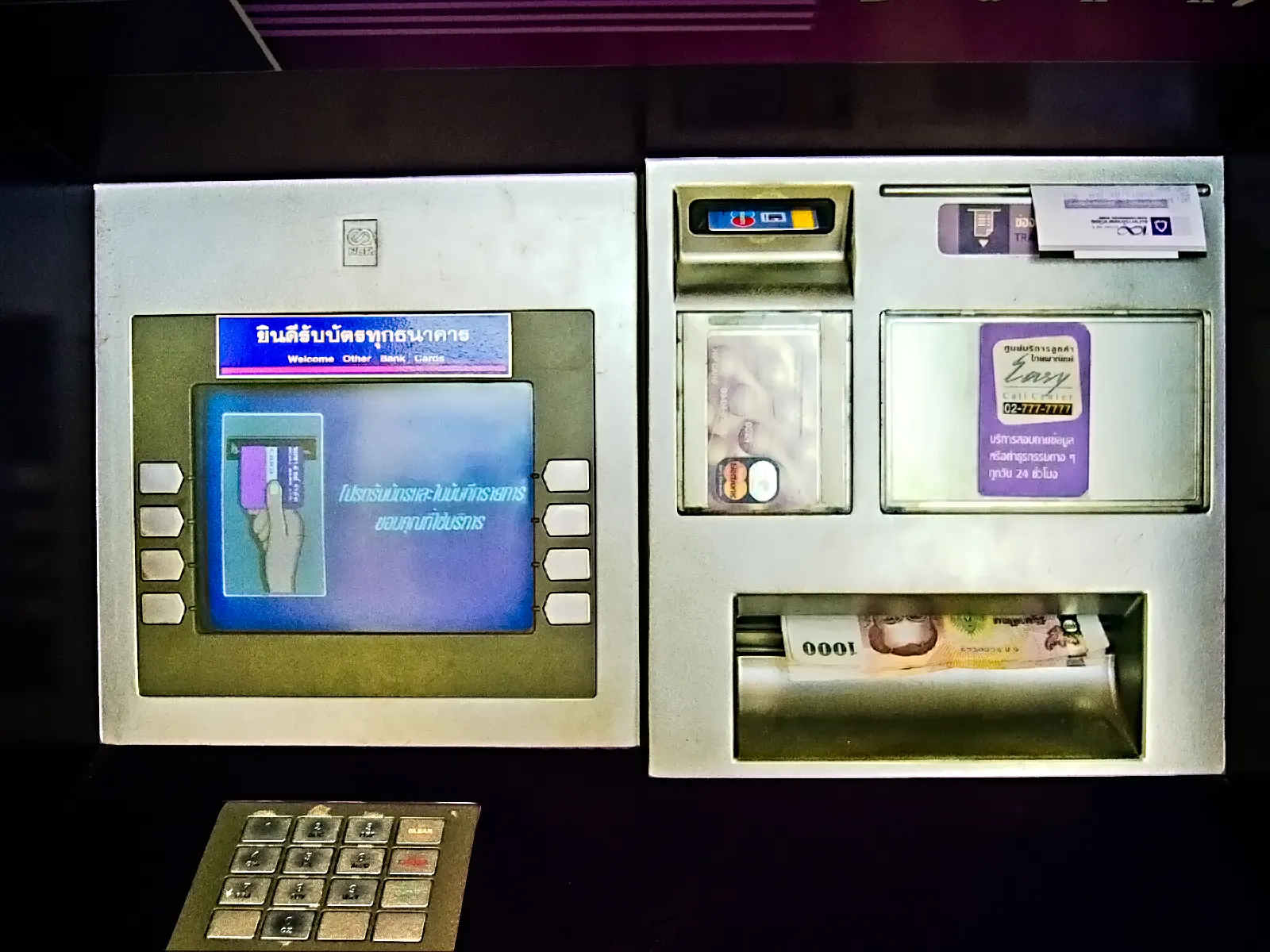
Every Thai ATM charges foreign cards a flat fee per withdrawal, separate from whatever your home bank adds. The standard rate across most Thai banks is ฿220–฿250 per withdrawal, regardless of card network. AEON Bank ATMs are the exception — they charge ฿150, the lowest widely available rate in Thailand.
The maths is straightforward: one ฿10,000 withdrawal costs ฿220–฿250 in fees. Five ฿2,000 withdrawals costs five times that for the same amount. Take out as much as you’re comfortable carrying in one go.
AEON Bank ATMs are worth finding. They sit inside Big C Extra supermarkets and some Central Group malls — worth a small detour.
Withdrawal limits
Most Thai ATMs cap a single withdrawal at ฿20,000 per transaction. Krungsri (Bank of Ayudhya) ATMs allow up to ฿30,000 in a single pull — useful if you’re carrying cash for a longer stay or a big purchase. Your home bank may have its own daily limit that’s lower than both, so check before you fly.
How to avoid the worst add-on fee
When an ATM offers to convert your withdrawal to your home currency — this is called Dynamic Currency Conversion, or DCC — always decline. Choose “pay in Thai baht.” If you accept, the ATM operator sets the exchange rate, typically 3–7% worse than the interbank rate your card uses. On a ฿10,000 withdrawal that’s an extra ฿300–฿700 on top of the flat fee. Decline every time, no exceptions.
ATM safety in Pattaya
Use ATMs inside or attached to bank branches where CCTV is running and security staff are around during banking hours. Standalone ATMs on tourist strips carry a higher risk of skimming devices — check that the card slot feels solid and nothing is loose before inserting. Our Pattaya scams guide covers ATM skimming and the other tourist traps worth reading before you arrive.
Currency exchange: where to get a decent rate
T.T. Currency Exchange
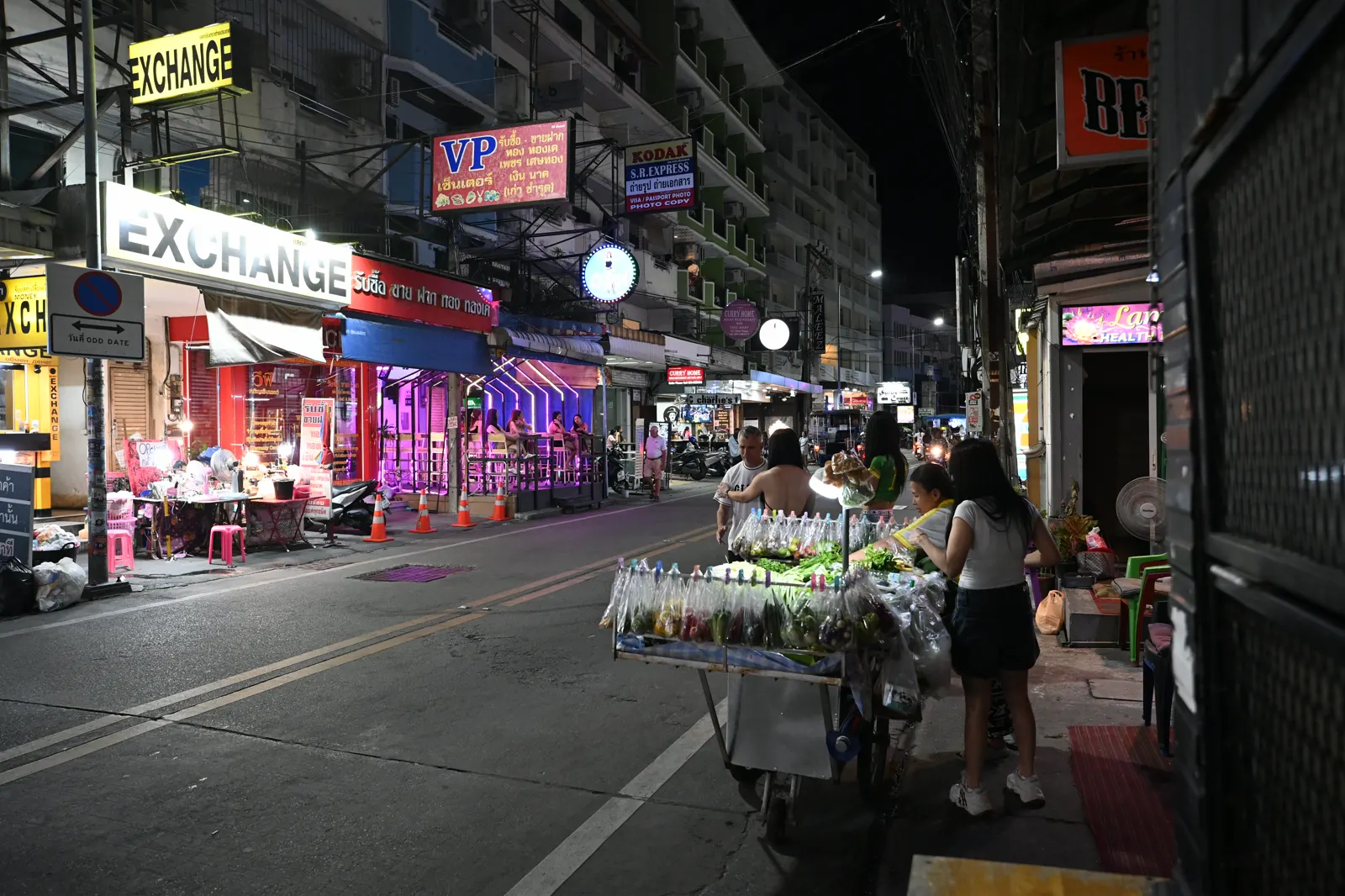
The yellow T.T. booths are the most visible exchange option in Pattaya and consistently offer the best street rates. You’ll find them on Second Road, Beach Road and in the main shopping precincts. If you’re changing a large amount, compare two or three booths — rates vary slightly between locations and time of day.
SuperRich inside Central Festival Mall
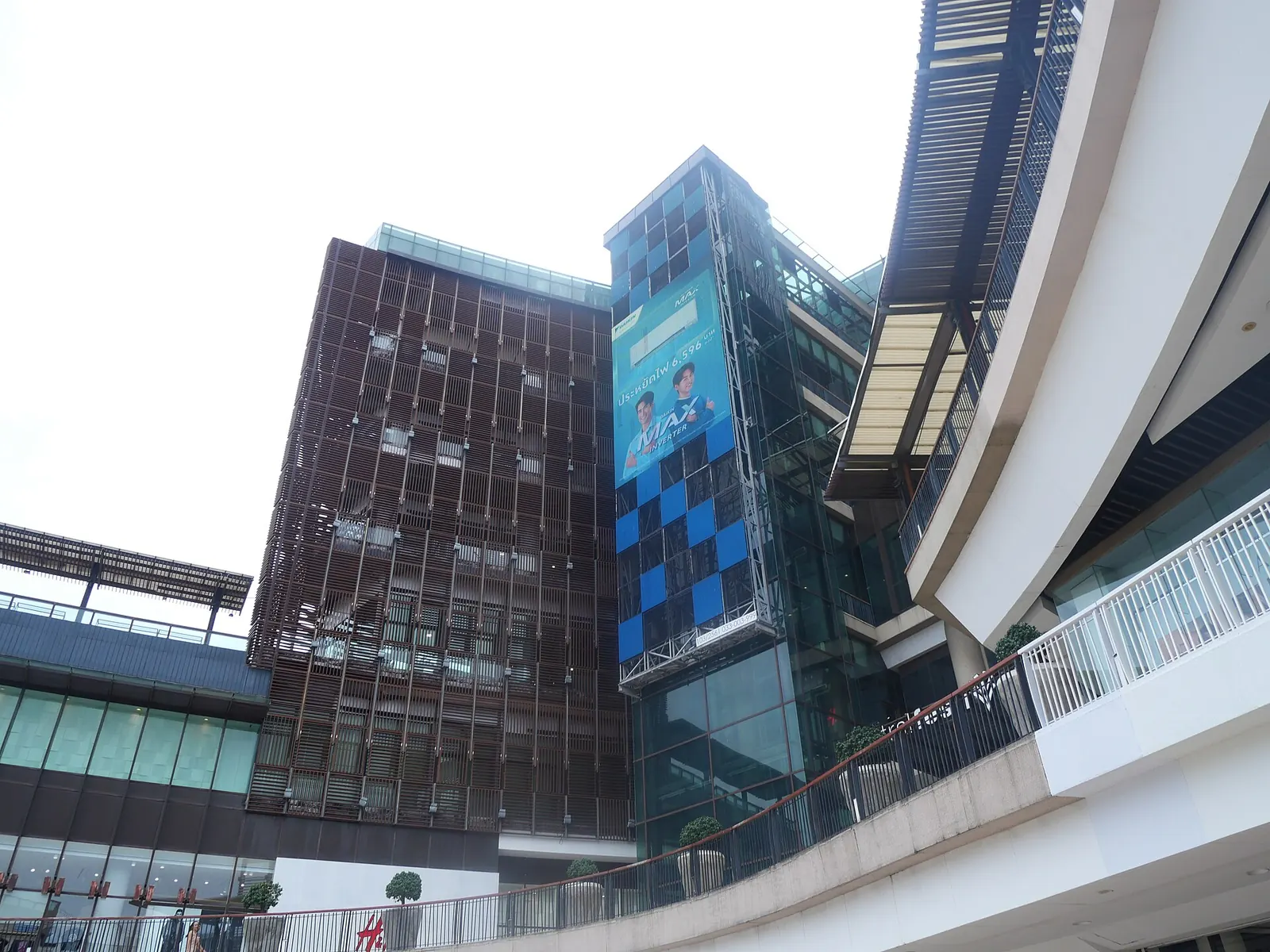
The SuperRich counter sits inside Central Festival Mall, accessible from the Second Road entrance. Walk in from that side, go straight through and look left just past the first row of shops — it’s tucked back, not obvious from the entrance. SuperRich (two separate companies, one with an orange sign, one green — both reputable) offers rates that compete with the street booths, with the bonus of air conditioning and security.
Tips for getting the best exchange rate
- Bring large-denomination notes. USD 50 and USD 100 bills get noticeably better rates than smaller notes at most booths. Torn, scribbled-on or heavily worn notes may be refused entirely.
- Bring your passport. Exchange booths require ID for every transaction — standard practice, not a flag.
- Avoid the airport. U-Tapao and Suvarnabhumi counters offer the worst rates you’ll find. Take out the minimum you need from an arrivals ATM for transport and your first meal, then exchange your main cash in town.
- Avoid the hotel. Hotel front desks almost always mark up significantly. Emergency use only.
Cards in Pattaya: where they work, where they don’t
Cards work at major hotels, international restaurants, big supermarkets (Tops, Big C, Villa Market), shopping malls (Central Festival, Terminal 21), 7-Eleven and FamilyMart, chain coffee shops (Starbucks, Black Canyon, Café Amazon), and through the Grab and Bolt apps.
Cards generally don’t work at street food stalls and night markets, baht buses, most local Thai restaurants, small bars and beer bars, market stalls, local massage shops and small guesthouses.
Cards that skip foreign transaction fees
If you travel regularly, cards from Wise (formerly TransferWise) or Revolut convert at close to the interbank rate with minimal foreign transaction fees. You still pay the Thai ATM’s flat fee, but you avoid the additional 1.5–3% currency conversion charge that most standard bank cards add. Worth setting up before you fly if you don’t already have one.
QR code payments
Thai QR payments are everywhere now, and tourists can use them too. If you have a Wise account, it supports Thai QR codes — open the app, tap “Pay”, scan the shop’s QR code, and the amount converts at Wise’s real exchange rate with no ATM fee. Many street food stalls, pharmacies and small shops display a PromptPay QR alongside their prices. It won’t replace cash entirely, but it’s a clean way to pay without withdrawing cash for every purchase.
How much cash to carry
What you need depends entirely on what you’re doing:
| Day type | Estimated spend |
|---|---|
| Beach day, street food, baht bus | ฿800–฿1,500 |
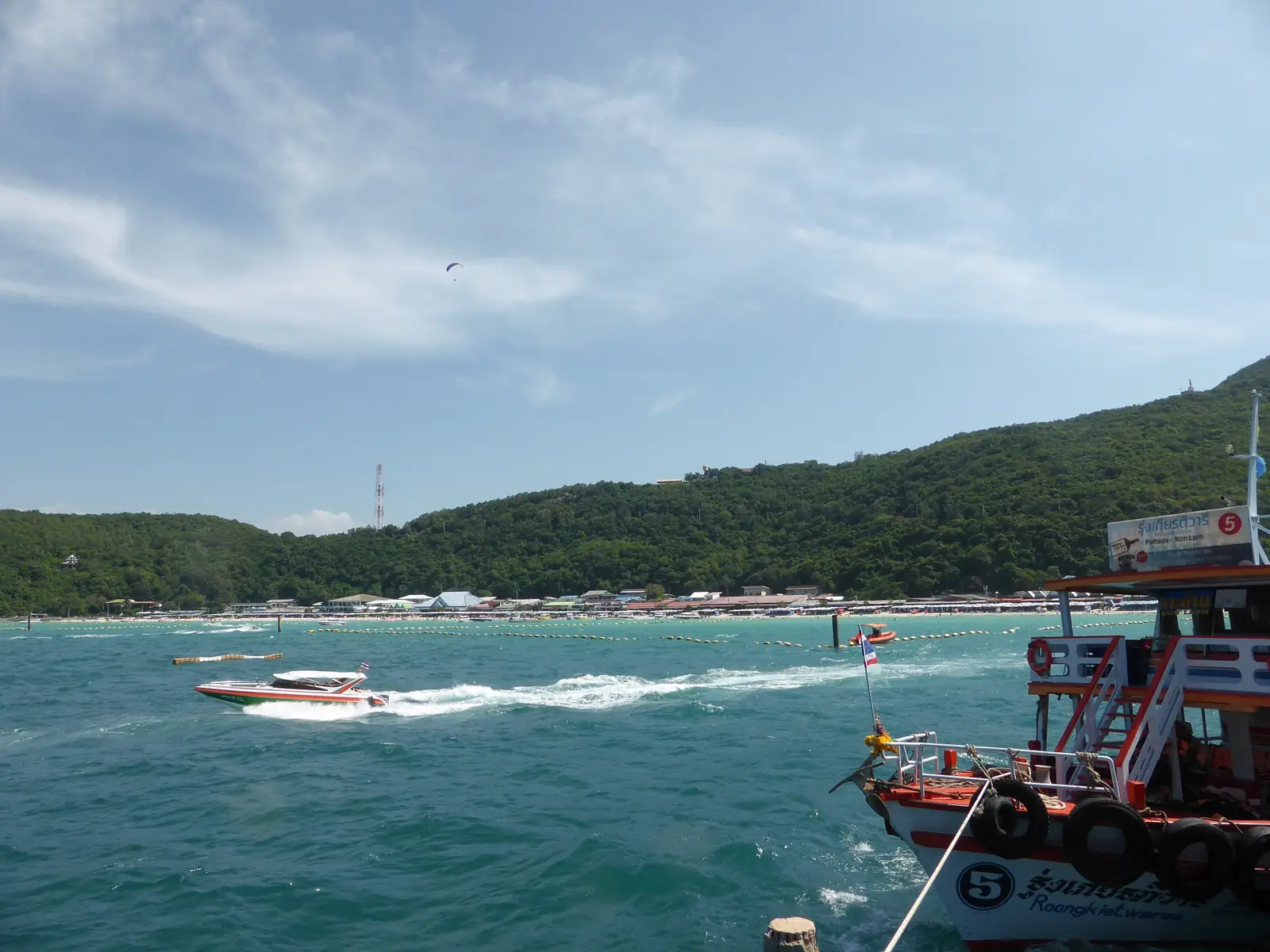
| Day trip (Koh Larn, island hopping) | ฿1,500–฿3,000 |
| Restaurant meals + some nightlife | ฿2,000–฿4,000 |
| Massage, market shopping, casual eating | ฿1,200–฿2,500 |
A sensible starting float is ฿3,000–฿5,000 when you arrive. Top up every two or three days from an AEON ATM to keep the fee count low. Getting around on the baht bus costs ฿15 per ride — carry small notes, because drivers won’t appreciate you handing over a ฿1,000 note for a ฿15 fare.
Breaking large notes: Thai ATMs dispense ฿1,000 notes. You cannot pay for street food, a baht bus or a bowl of noodles with one — vendors and drivers rarely carry enough change. The simplest fix: step into any 7-Eleven after you withdraw and buy a drink or snack. You’ll get back ฿100, ฿50 and ฿20 notes that work everywhere. Do it every time you withdraw.
Tipping in Pattaya
Thailand is not a tipping culture in the way the US is. Nobody will be offended if you don’t tip, and nobody expects it. That said, Pattaya is a heavily touristed city and a tip for good service is genuinely appreciated — especially in jobs where base wages are low.
Massage
The standard tip after a Thai massage is ฿50 per hour for a straightforward session, ฿100 if the therapist was particularly good or you had a longer treatment. The house keeps most of the posted price, so the therapist’s take-home is directly tied to gratuities. Pay cash, hand it directly to the person who worked on you.
Restaurants
At a casual local restaurant or street stall, rounding up or leaving ฿20–฿50 is plenty. At a mid-range or upscale sit-down restaurant, 10% is right for genuinely good service. Check the bill first — many tourist and hotel restaurants already add a 10% service charge plus 7% VAT. Tipping on top of that is your call, not an obligation.
Taxis and Grab
No tip expected on Grab or Bolt — the price is fixed upfront and drivers know this. For a metered taxi or a long run with a driver who handled your luggage well, rounding up to the nearest ฿50 or ฿100 is a fair gesture.
Hotels
Bellhop or porter: ฿20–฿50 per bag is the going rate. Housekeeping: ฿20–฿50 per night, left in cash — it often gets pooled rather than going to the specific person who cleaned your room. Neither is expected in budget properties; both are appreciated in mid-range and above.
Watch: avoiding the biggest money mistakes in Thailand
FAQ: Money in Pattaya
How much does a Thai ATM charge for foreign cards in 2026?
Most charge a flat ฿220–฿250 per withdrawal regardless of card network. AEON ATMs are cheapest at ฿150 — find them in Big C Extra stores. Withdraw in larger amounts to keep the fee count low, and always decline the machine’s currency conversion to avoid an extra 3–7% on the exchange.
Where is the best place to exchange currency in Pattaya?
T.T. Currency Exchange yellow booths on Second Road and Beach Road, or the SuperRich counter inside Central Festival Mall (Second Road entrance, look left past the first shops). Avoid the airport and your hotel — both charge significant premiums.
Should I use card or cash in Pattaya?
Cash for everything local: street food, baht buses, markets, small bars, massage shops. Card at malls, hotels and Grab/Bolt. Carry a float of ฿1,000–฿3,000 at all times and top up from an AEON ATM every couple of days.
Do I need to tip in Pattaya?
No — tipping is not expected. ฿50–฿100 after a massage is the norm if you want to; rounding up a restaurant bill is appreciated. Check sit-down restaurant bills for a 10% service charge before adding anything.
Is it better to bring cash to exchange or use ATMs?
ATMs on arrival work well — you get a fair rate and avoid carrying cash through the airport. If you bring foreign cash, bring large clean notes (USD 100 gets a better rate than USD 20) and exchange at T.T. booths or SuperRich, never at the airport or your hotel.