

Do You Need a Visa for Pattaya? Thailand Entry Rules (2026)
No separate Pattaya visa exists — Pattaya is in Thailand, and the same national entry rules apply everywhere in the country. Most Australians, Kiwis, Brits, Americans, Canadians and EU passport holders can enter without applying for a visa first. From 15 September 2026 that visa-free tourism stay is 30 days.
Last checked: 13 October 2026, against the Royal Gazette notice published 31 August 2026. Visa rules change — confirm with the Thai Immigration Bureau or your embassy before booking.
Quick facts (checked October 2026)
- Most Western nationalities enter visa-free — no visa arranged in advance. From 15 September 2026 the tourism exemption is 30 days.
- All travellers must complete the TDAC (Thailand Digital Arrival Card) within 72 hours before arrival. It’s free and done online. Without it you may face delays at immigration.
- Passport must be valid for at least 6 months from your entry date.
- Extensions cost ฿1,900 and buy you an extra 30 days at the local immigration office — no need to leave the country.
- Visa on Arrival is now Azerbaijan, Belarus and Serbia. India is on the 30-day exemption list, not Visa on Arrival. Confirm the airport fee before you fly.
- If you need more time than the exemption allows, a Tourist Visa (TR) applied for before travel gives you 60 days, extendable to 90.
What’s actually changing in 2026
The Cabinet approved a return to a 30-day tourism exemption on 19 May 2026. The Ministry of Interior announcements were published in the Royal Gazette on 31 August 2026 and took effect on 15 September 2026. Visa-exempt tourism entry for the listed nationalities is now 30 days. Anyone who entered before 15 September keeps the date already stamped in their passport.
The official government note is on the Thai government public-relations page. Check it again a week before you fly. A short holiday fits inside 30 days. A longer trip needs the extension below, or a tourist visa arranged before travel.
Bilateral agreements were not replaced by the 30-day tourism list:
- Argentina, Brazil, Chile, Peru, South Korea: 90 days
- China, Russia, Kazakhstan, Vietnam, Laos, Mongolia, Hong Kong, Macao: 30 days
Japan is on the 30-day tourism list, not the 90-day bilateral list.
Step 1: Complete the TDAC before you fly
The Thailand Digital Arrival Card (TDAC) replaced the old paper TM6 form. It’s mandatory for all foreign visitors entering by air, land or sea, and you submit it online before you travel — not at the airport.
How to do it:
- Go to tdac.immigration.go.th — this is the only official site, and it’s free. Be careful of lookalike sites that charge a “processing fee”; the TDAC is always free.
- Have your passport and accommodation address ready
- Submit within 72 hours of your arrival date
- You’ll receive a QR code by email — show it at immigration
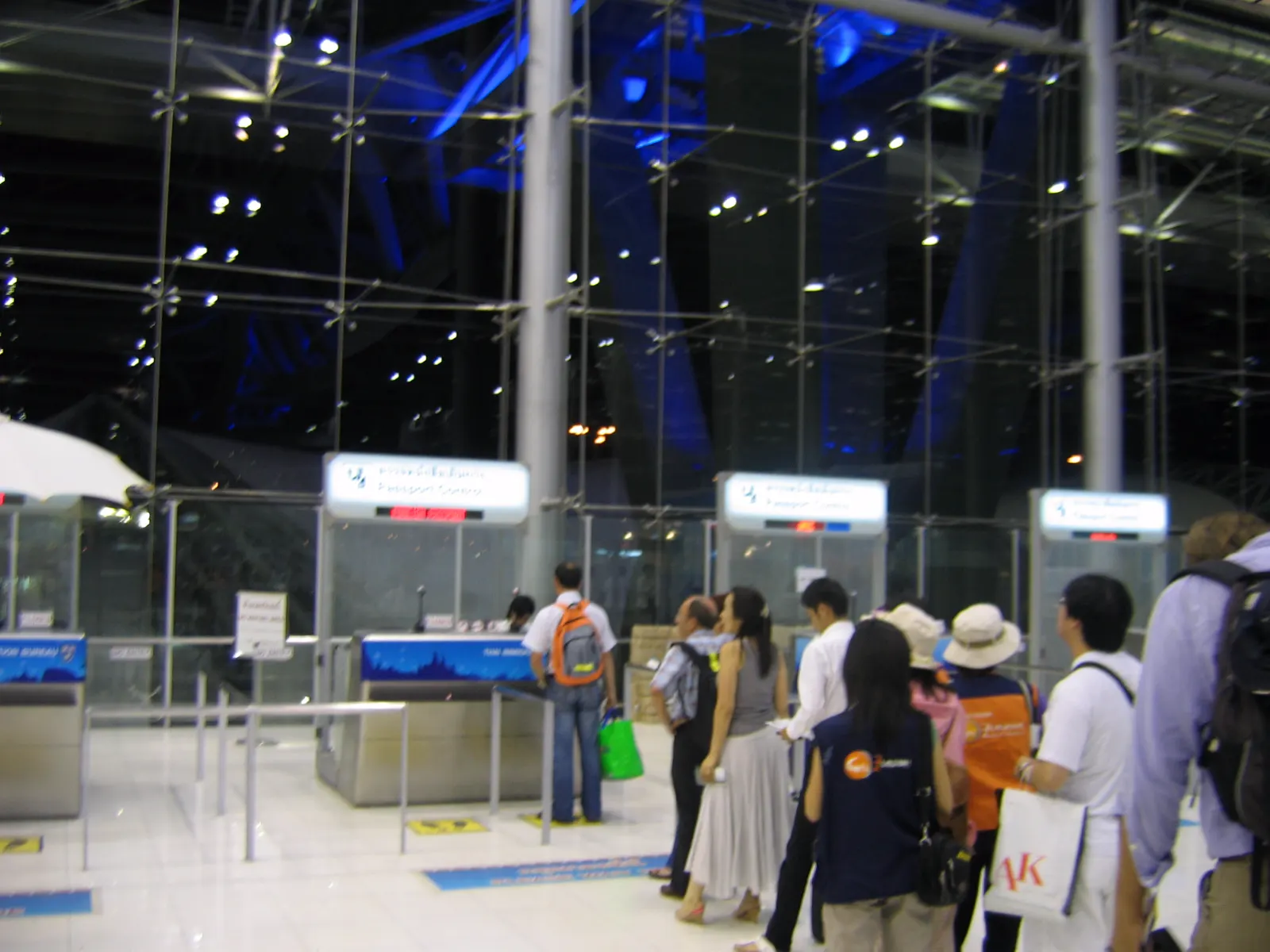
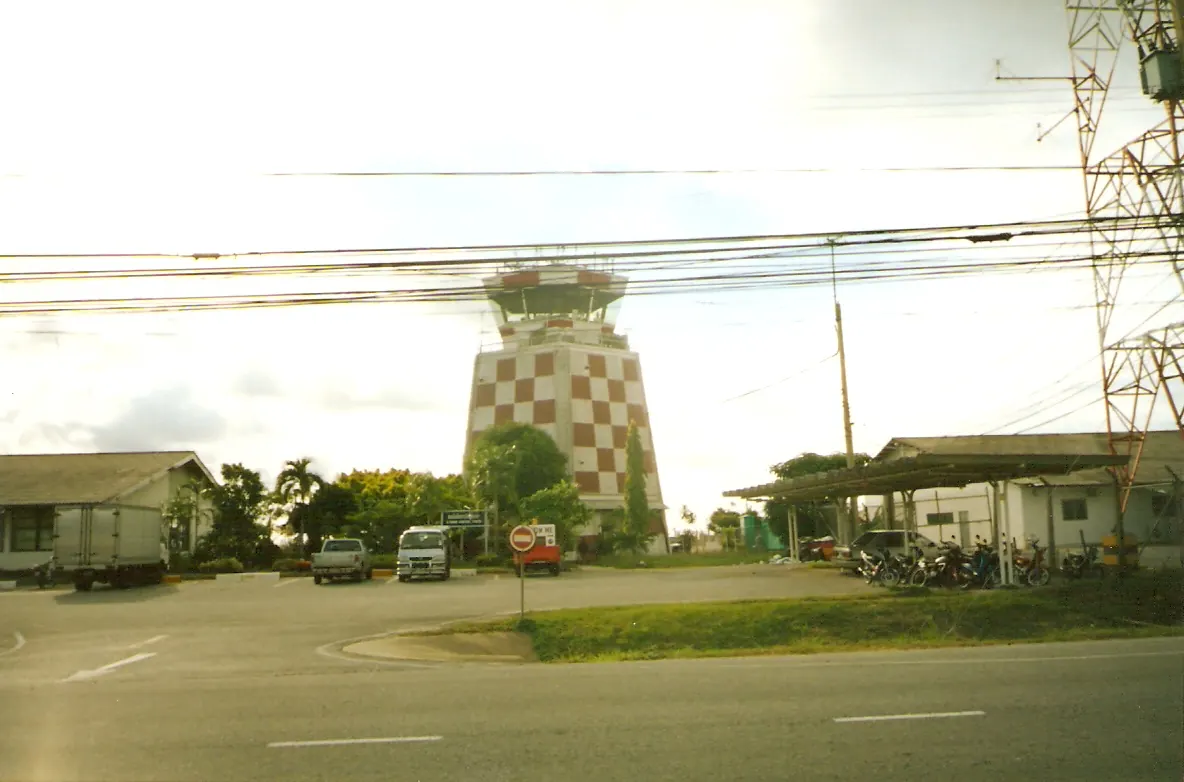
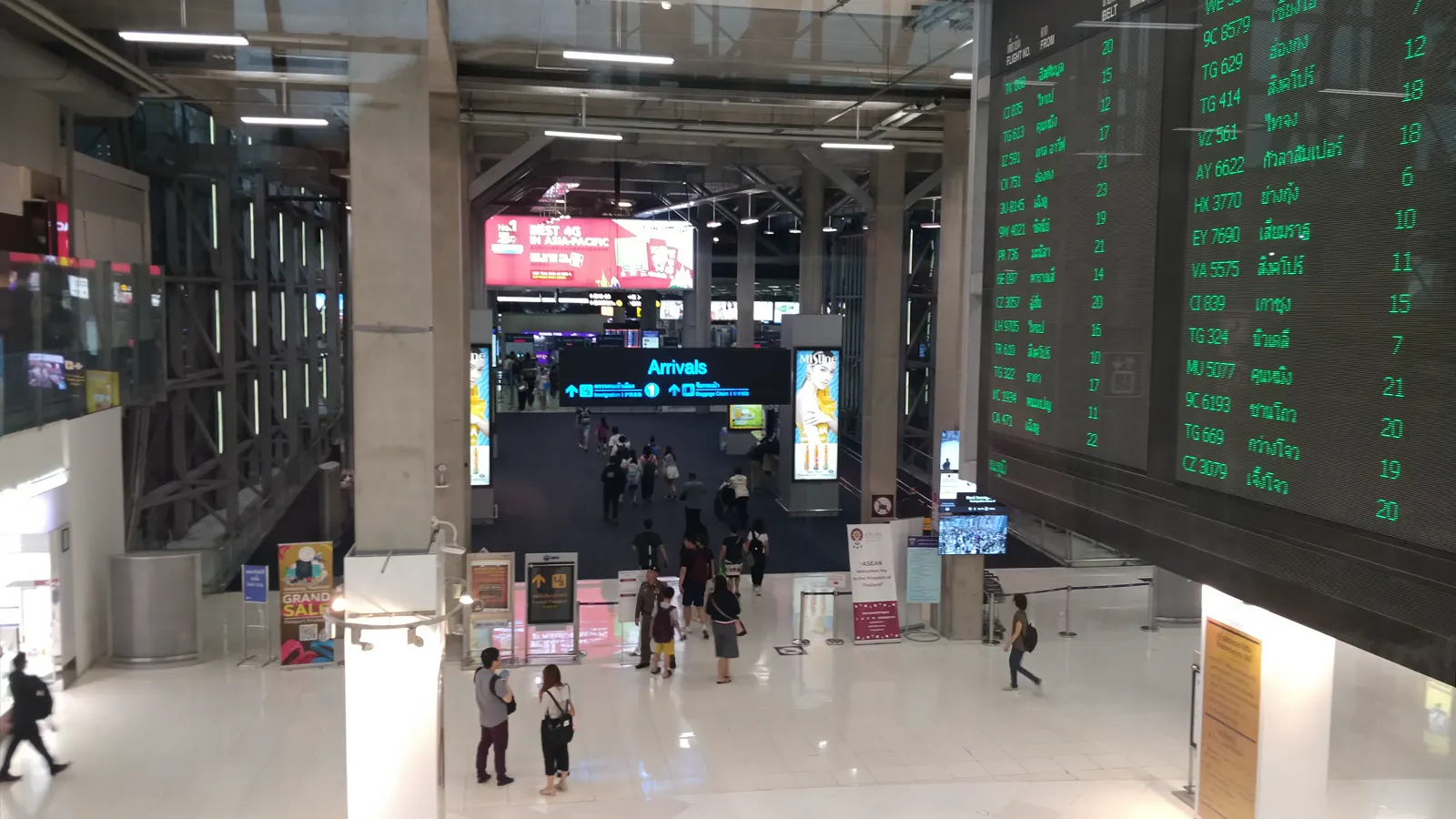
Most visitors land at Suvarnabhumi and clear immigration there before the transfer to Pattaya. The Bangkok to Pattaya guide covers that ride. These photos are the Bangkok queue and the U-Tapao tower, not the Jomtien immigration office.
For your accommodation address in Pattaya: the province is Chon Buri, district is Bang Lamung, and the postcode is 20150 for central Pattaya or 20250 for Jomtien. If you’re in a hotel, use their full address exactly. If you booked an Airbnb, use the property address.
Which visa situation applies to you?
Visa-exempt nationalities (most visitors)
The 30-day tourism exemption covers 60 countries and territories, including Australia, Canada, Japan, New Zealand, the UK, the USA, India, and the EU countries on the published list. You do not apply at an embassy for that stamp. You still complete the TDAC before you fly (see Step 1 above). Bilateral agreements sit beside that list, so a passport dropped from the 30-day list is not automatically visa-required.
Common passports at a glance (from 15 September 2026):
| Passport | Entry type | Current stay | Action before flying |
|---|---|---|---|
| Australia, NZ, UK, EU, USA, Canada, Japan, India | Visa-exempt, tourism | 30 days | TDAC only |
| South Korea, Argentina, Brazil, Chile, Peru | Bilateral exemption | 90 days | TDAC only |
| China, Russia, Kazakhstan, Vietnam, Laos, Hong Kong, Macao | Bilateral exemption | 30 days | TDAC only |
| Azerbaijan, Belarus, Serbia | Visa on Arrival | 15 days | Check the current airport fee |
| Others not exempt | Tourist Visa TR | 60 days | Apply before you fly |
Visa on Arrival (VoA)
VoA is now a short list: Azerbaijan, Belarus and Serbia. It is a visa issued at the airport, not the 30-day exemption. India is on the 30-day visa-exempt list, so the old “Indian travellers pay ฿2,000 on arrival” advice no longer matches the published list. Confirm the VoA fee on the official notice before you fly, and do not assume a VoA can be extended.
Tourist Visa (TR) — apply before you leave
The Tourist Visa is the right choice when:
- Your nationality isn’t exempt or on the VoA list
- You want a guaranteed 60-day stay regardless of any exemption changes
- You’re planning to extend to 90 days
Do this before you fly. You cannot convert a visa-exempt stamp into a Tourist Visa inside Thailand.
How to apply: Use the Thai e-Visa portal where it covers your country, or apply at a Thai embassy or consulate in person. The fee varies by country — the Thai e-Visa site shows the exact amount at application. Processing takes 5–10 business days.
Documents needed:
- Passport valid for 6+ months
- Return flight booking confirmation
- Hotel or accommodation booking
- Bank statement showing at least ฿20,000 (per person) or ฿40,000 (per family) in available funds
The Tourist Visa grants 60 days from first entry, extendable once by 30 days (total 90 days) at any immigration office.
This clip was published on 18 March 2026, before the Royal Gazette notice of 31 August. The stay length in the video is the old rule. Use the 30-day date in this guide.
Extending your stay in Pattaya
If you want to stay longer than your stamp allows, you extend at the local immigration office — no border run needed.
Where to go in Pattaya: Chon Buri Immigration, Jomtien Soi 5, off Jomtien Beach Road. The photo at the top is Suvarnabhumi arrivals in Bangkok, not this office.
Extension cost: ฿1,900 for a 30-day extension
What to bring:
- Passport (original)
- Completed TM.7 form (available at immigration or download in advance)
- One 4×6 cm passport photo
- ฿1,900 in cash
- Photocopies of your passport photo page, entry stamp page and any visa page
- TM30 receipt from your hotel or landlord (this is the accommodation registration form — your hotel files it, so ask reception for a copy before you go)
Missing the TM30 copy is the most common reason people are turned away. Hotels file it automatically when you check in; ask for a printed copy the day before you plan to visit immigration.
Arrive early — the office opens at 8:30am and the queue fills fast, especially on Mondays after a long weekend. Once your number is called, the desk part is usually quick; the waiting is the pain. You walk out with a 30-day extension stamped in your passport.
Some hotels and travel agencies in Pattaya offer to handle the extension for you for a fee (typically ฿500–฿1,000 service charge on top of the ฿1,900 government fee). It’s not necessary — the process is straightforward if you go yourself — but it saves the queue if your time is tight.
If you’re weighing up a longer stay in Pattaya, our digital nomad guide covers monthly costs and long-term options. For scams to avoid during your trip (including a few targeting tourists at immigration queues), see the Pattaya scams guide.
Overstays — don’t
If you stay past your permitted date, the fine is ฿500 per day, capped at ฿20,000. Pay it when you leave at the airport or land border. If you overstay fewer than 90 days and leave voluntarily, the fine is usually the only consequence. Stay over 90 days and re-entry bans kick in on top of the fine. Get caught by immigration rather than leaving voluntarily — even a short overstay can trigger a 5-year ban.
If you realise you’ve run out of time, go to immigration and sort it out yourself. The longer you leave it, the worse it gets.
Practical checklist before you go
- Confirm your nationality qualifies for visa-free entry (or arrange a TR if not)
- Passport valid 6+ months beyond your entry date — airlines may deny boarding if not
- Complete the TDAC at tdac.immigration.go.th within 72 hours of arrival (free, official site only)
- Have your Pattaya accommodation address in Chon Buri province ready to enter
- Have a return or onward flight booked — immigration and airlines occasionally ask for it
- Carry a printed or digital copy of your TDAC QR code
- Ask your hotel for a TM30 copy on check-in if you plan to extend your stay
- Have ฿1,900 available if you plan to extend your stay
Our Pattaya money guide covers ATMs, fees, and how much cash to carry once you’re on the ground.
Frequently asked questions
Do I need a visa to visit Pattaya?
Most visitors from Western countries don’t apply in advance. From 15 September 2026 the tourism exemption is 30 days for the published list, including Australia, New Zealand, the UK, the USA, Canada and the EU countries on that list. Everyone still completes the free TDAC within 72 hours before arrival.
What is the TDAC?
It’s the online replacement for the old paper arrival card (TM6). Submit it at tdac.immigration.go.th within 72 hours before you land — mandatory for everyone, free, takes about 5 minutes. You get a QR code to show at immigration.
How long can I stay without a visa?
30 days for tourism if your passport is on the exemption list that took effect on 15 September 2026. Argentina, Brazil, Chile, Peru and South Korea still have 90 days under bilateral agreements. A further 30 days is available at a local immigration office for ฿1,900.
Where do I extend in Pattaya?
Chon Buri Immigration on Jomtien Beach Road. Bring your passport, a TM.7 form, one 4×6 cm photo, and ฿1,900 cash. Go early — they open at 8:30am and the queue fills fast.
Do I need to do a border run?
Not usually. You can extend your stay once at a local immigration office for ฿1,900 without leaving Thailand. If you need longer than that allows, a Tourist Visa applied for before departure is the cleaner option.